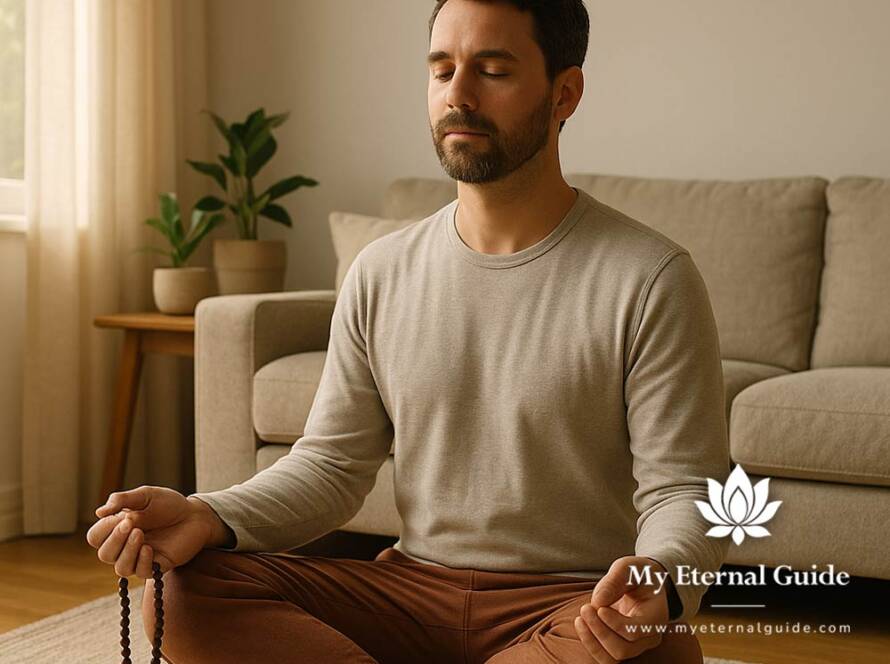
How to Calm the Restless Mind Through Timeless Vedic Wisdom
January 24, 2025 | By Madhura Samarth – Founder, MyEternalGuide

TL;DR: Anxiety and overthinking affect millions worldwide, but ancient Indian wisdom offers practical, natural solutions to calm the restless mind. Teachings from Ayurveda, Yoga and scriptures like the Bhagavad Gita and Upanishads explain that anxiety often arises from an imbalance in the mind and the nervous system. By restoring balance through Ayurvedic herbs such as Ashwagandha and Brahmi, calming breath practices (pranayama), meditation, mantra chanting like the Hare Krishna Maha Mantra and reflective wisdom from Vedic philosophy, people can naturally reduce stress, improve emotional resilience and cultivate lasting inner peace.
Why Anxiety Deserves Our Attention
The world today is fast, noisy and demanding. Anxiety—whether it’s chronic worry, sleep‑robbing overthinking or sudden panic—has become nearly universal. Recent WHO statistics show nearly 970 million people worldwide battle anxiety or depression, making it one of the leading causes of global distress. Urban India, too, faces soaring rates of stress, thanks to relentless work pressures and digital overload.
Fortunately, ancient Vedic traditions—Ayurveda, Yoga, mantras and scriptures—offer profound, practical guidance that modern science is now validating.
Ayurveda: Rebalancing Body, Mind & Nervous System
Dosha Balance & Diet
Anxiety most often stems from vitiated Vāta (air and space elements). Ayurveda prescribes warm, moist, sattvic foods—gentle khichdi, rice with ghee, pottages—while avoiding stimulants like caffeine, fried or overly spicy meals, which aggravate Vāta.
Herbal Allies for Anxiety (with Practical Usage)
1. Ashwagandha (Withania somnifera)
- Form: Powder (churna), capsules, tablets, or liquid extract.
- Recipe (classic Ayurvedic):
- 1 tsp Ashwagandha powder in warm milk with a pinch of cardamom/cinnamon.
Add ½ tsp ghee and a little jaggery or honey (after cooling slightly).
- Take before bed — reduces cortisol and promotes sound sleep.
- 1 tsp Ashwagandha powder in warm milk with a pinch of cardamom/cinnamon.
- Dose:
- Powder: 3–6 g/day (usually divided).
- Capsules/tablets: 300–500 mg, 1–2 times/day.
- Caution: Avoid in pregnancy; consult doctor if on thyroid or blood pressure medication.
2. Brahmi (Bacopa monnieri)
- Form: Fresh juice, powder, capsules, or Brahmi oil.
- Recipe (tea):
- Boil 1 tsp Brahmi leaves or powder in 1.5 cups water until reduced to 1 cup.
- Strain; drink warm, optionally with honey.
- Dose:
- Powder: 2–3 g/day.
- Capsules/tablets: 300–450 mg extract/day.
- External use: Brahmi oil (applied to scalp at night) is calming for racing thoughts.
- Caution: May cause nausea in high doses; best with meals.
3. Shankhapushpi (Convolvulus pluricaulis)
- Form: Powder, syrup, or capsules.
- Recipe (syrup):
- Available as Ayurvedic formulation (Shankhapushpi Syrup), often taken 1–2 tsp with water or warm milk.
- Helps students and professionals manage overthinking and sleeplessness.
- Dose:
- Powder: 2–4 g/day.
- Syrup: 1–2 tsp, once or twice daily.
- Caution: Use under guidance if already on psychiatric or sedative medicines.
4. Jatamansi (Nardostachys jatamansi)
- Form: Powder, decoction, capsules, or oil.
- Recipe (powder + milk):
- Mix ½ tsp Jatamansi powder in warm milk at night.
- Known to ground restlessness, reduce panic, and support deep sleep.
- Dose:
- Powder: 1–3 g/day.
- Capsules: 300–500 mg, once or twice daily.
- External use: Jatamansi oil (apply on scalp/temples for insomnia).
- Caution: Avoid excess (too sedative); consult if on blood-thinning medication.
General Guidance
- Best Time: Evening or night, as anxiety peaks then.
- Medium (Anupana): Warm milk, ghee, or honey enhances absorption.
- Consistency: Herbs show results over 2–6 weeks with daily use.
- Quality: Always source from trusted Ayurvedic pharmacies (Himalaya, Dabur, Baidyanath, Kerala Ayurveda, etc.) or certified organic brands.
Before taking any of these, please consult a certified Ayurvedic physician.
Therapeutic Support
Ayurvedic therapies like Shirodhara (warm oil poured on forehead), Shiropichu and Nasya are renowned for soothing the nervous system and clearing mental fog. These holistic therapies are excellent for deeper Vāta pacification.
Daily Rhythm for Stability
- Bedtime by 10 pm prevents mental agitation.
- Wake at Brahma Muhurta to embrace tranquility before the day’s noise.
- Regular meals, sleep and activity stabilize both digestion and mood.
Yoga & Pranayama: Breathing Into Calm
Breath Practices for Instant Peace
- 4‑4‑6 Breathing: Inhale 4, hold 4, exhale 6. A simple reset for a racing mind.
- Nadi Shodhana (Alternate Nostril) balances left-right brain energy.
- Bhramari (Bee Breath): Humming creates calming vibrations that quiet thought loops.
Deep Relaxation
- Yoga Nidra: A guided, yogic sleep that bypasses the thinking mind and restores inner equanimity.
- Restorative Asanas: Poses like Child’s Pose or Legs-Up-the-Wall provide instant nervous system relief.
Ancient Scriptures: Timeless Remedies for Modern Stress
Bhagavad Gītā: Mind Mastery
Arjuna’s battlefield anxiety mirrors our inner turmoil—shaking hands, racing thoughts, paralyzing fear. Krishna responds:
“For one who has conquered the mind, the mind is the best friend; but for one who has failed, the mind becomes the greatest enemy.” (Gītā 6.6)
This counsel is a direct prescription: train the mind and anxiety becomes an ally.
Additional Gītā verses offer powerful antidotes:
- 2.47: Focus on duty, not results—reduces anxiety about outcomes.
- 2.14: All sensations are temporary—cultivates resilience.
- 6.5: Elevate, don’t degrade yourself—reinforces self-agency.
- 12.15: Inner equanimity makes one dear to the divine.
- 18.66: Surrender dispels fear—letting go can heal anxiety.
Śrīmad Bhāgavatam: Trust Through Trials
Bhāgavatam 10.14.8 reminds us self-transformation happens through patience and devotion—not immediate control. Anxiety dissolves when we stop resisting and start surrendering.
Upaniṣadic Wisdom
The Kaṭha Upaniṣad likens the psyche to a chariot: the intellect is the driver, the mind the reins and the senses the horses. Tighten the reins—let wisdom steer—and anxiety’s chaos dissolves.
From Vedanta, the principle of titikṣā (patient endurance) teaches: bear discomfort without resistance and peace emerges in its stead.
Unity in Self
The Chandogya Upaniṣad’s Tat Tvam Asi (“That Thou Art”) reminds us: Atman is universal. Recognizing our unity with the cosmos dissolves isolation and fear.
Divine Anchors in Anxious Times
- Goddess Sarasvatī: Her embodiment of clarity cuts through anxiety’s fog. Visualizing her light or chanting Om Aim Sarasvatyai Namah creates inner focus.
- Śrīla Prabhupāda: He taught that in Kali-yuga, chanting the Hare Krishna Mahāmantra is the medicine for an anxious mind—a spiritual prescription for deep rest.
Take refuge in any name, form or mantra that you have faith in and ask for protection.
Modern Science Validates Mantras & Meditation
Research shows that mantra meditation quiets the amygdala (our fear center), activates the vagus nerve (promoting calm) and shifts the brain into restful modes—reducing anxiety and even improving sleep.
7-Day Plan to Ground the Mind
| Day | Practice |
| 1–2 | Ashwagandha tea + gentle 4‑4‑6 breathing. |
| 3–4 | Abhyanga on feet + 108 rounds of Hare Krishna. |
| 5–6 | Yoga Nidra or restorative pose before bed. Here is a guided video you can follow. |
| 7 | Digital detox + journaling anxieties → offering to Krishna via prayer. |
Everyday Practical Takeaways
- Morning Anchor: Start your day with 3 minutes of mantra chanting—before screen time.
- Breathing Breaks: Practice 4‑4‑6 breaths whenever anxiety strikes.
- Control Journal: Daily write: “What I control vs. what I surrender.”
- Weekly Satsang: Join an online Gītā circle or kīrtan to ground your mind socially and spiritually.
If you’d like support in turning these teachings into a daily rhythm that actually feels doable, www.MyEternalGuide.com offers calm, personalised answers whenever you need them.
FAQs: Anxiety Edition
2. Which Ayurvedic herbs help with anxiety and how do I take them?
Common supports include Ashwagandha (300–500 mg capsules 1–2x daily or 1 tsp powder in warm milk at night), Brahmi (300–450 mg extract daily or 2–3 g powder as tea; Brahmi oil on scalp), Shankhapushpi (2–4 g powder or 1–2 tsp syrup 1–2x daily), and Jatamansi (300–500 mg capsules 1–2x daily or ½–1 tsp powder in warm milk at night). Consult a qualified practitioner if pregnant, on medication, or managing medical conditions.
3. How do I practice Yoga Nidra for anxiety relief?
Lie in Shavasana, set a simple Sankalpa (e.g., “My mind is steady”), follow a guided body scan, observe natural breath, allow soothing visualizations, and repeat the Sankalpa near the end. Practice 20–30 minutes before sleep or during daytime rest. Prefer authentic Indian tradition guides from Rishikesh/Gurukuls.
4. What does the Bhagavad Gita say about anxiety?
Gita 6.6 teaches that an untrained mind becomes our enemy, while a disciplined mind is our best friend. Additional verses (2.47, 2.14) reduce outcome-anxiety and cultivate resilience; surrender and steady practice transform worry into purpose.
5. Are there practical daily steps to manage anxiety?
Yes, morning mantra before screen time; breath breaks (5 rounds of 4-4-6) during spikes; a daily “control vs. surrender” journal note; weekly satsang or kirtan; and a simple 7-day plan combining herbs, breathwork, Yoga Nidra, and digital detox
6. How long until these methods start working?
Many people feel noticeably calmer within a week of consistent practice. Herbs typically take 2–6 weeks for full effect; breathwork and mantra can help within minutes.
7. Is modern science supportive of these Vedic practices?
Yes. Studies show breathwork, mantra meditation, Yoga Nidra, and adaptogens like Ashwagandha reduce stress hormones, improve heart-rate variability, and support emotional regulation.
8. Can I use these methods alongside professional care?
Absolutely. These practices complement therapy and medical care. Seek professional guidance for persistent or severe anxiety, and inform your clinician about any herbs you take.
Combine slow 4-4-6 breathing (inhale 4, hold 4, exhale 6) with mantra chanting—Hare Krishna Mahamantra or Om Namah Shivaya—for a few minutes. This quickly shifts the nervous system from fight-or-flight to calm.
Common supports include Ashwagandha (300–500 mg capsules 1–2x daily or 1 tsp powder in warm milk at night), Brahmi (300–450 mg extract daily or 2–3 g powder as tea; Brahmi oil on scalp), Shankhapushpi (2–4 g powder or 1–2 tsp syrup 1–2x daily), and Jatamansi (300–500 mg capsules 1–2x daily or ½–1 tsp powder in warm milk at night). Consult a qualified practitioner if pregnant, on medication, or managing medical conditions.
Lie in Shavasana, set a simple Sankalpa (e.g., “My mind is steady”), follow a guided body scan, observe natural breath, allow soothing visualizations, and repeat the Sankalpa near the end. Practice 20–30 minutes before sleep or during daytime rest. Prefer authentic Indian tradition guides from Rishikesh/Gurukuls.
Gita 6.6 teaches that an untrained mind becomes our enemy, while a disciplined mind is our best friend. Additional verses (2.47, 2.14) reduce outcome-anxiety and cultivate resilience; surrender and steady practice transform worry into purpose.
Yes, morning mantra before screen time; breath breaks (5 rounds of 4-4-6) during spikes; a daily “control vs. surrender” journal note; weekly satsang or kirtan; and a simple 7-day plan combining herbs, breathwork, Yoga Nidra, and digital detox.
Many people feel noticeably calmer within a week of consistent practice. Herbs typically take 2–6 weeks for full effect; breathwork and mantra can help within minutes.
Yes. Studies show breathwork, mantra meditation, Yoga Nidra, and adaptogens like Ashwagandha reduce stress hormones, improve heart-rate variability, and support emotional regulation.
Absolutely. These practices complement therapy and medical care. Seek professional guidance for persistent or severe anxiety, and inform your clinician about any herbs you take.