How Vedic Self Help Transforms Daily Life
December 18, 2025 | by Madhura Samarth – Founder, MyEternalGuide
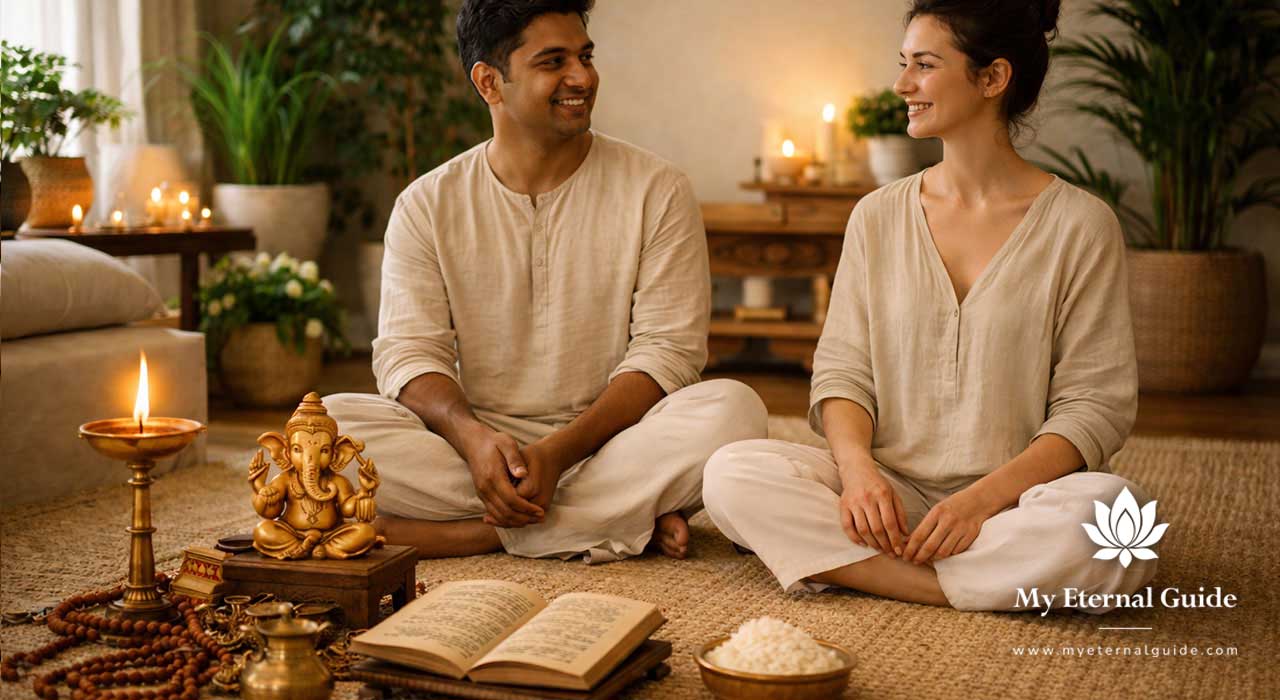
TL;DR: Vedic self help applies timeless wisdom from the Vedas, Upanishads and the Bhagavad Gita to modern challenges like stress, anxiety, self-doubt and lack of purpose. Unlike modern motivational advice which focuses on quick fixes, Vedic teachings address the root causes of suffering. These root causes lie in ignorance (avidya), mental conditioning (samskaras) and imbalance in the mind.
The Vedic approach emphasizes inner strength (Atma Shakti), disciplined effort (purushartha) and alignment with universal order (ṛta). By understanding the nature of the mind and practicing simple disciplines such as breath awareness, mantra, gratitude and ethical living, we can gradually cultivate clarity, emotional stability and confidence.
Ancient stories like Arjuna’s crisis in the Bhagavad Gita and King Janaka’s balanced life demonstrate that spiritual wisdom can guide practical decision-making even in the middle of responsibilities and pressure.
Why the Vedas Are the Missing Piece in Today’s Self Help World
Self help advice today often focuses on quick motivation. Yet the questions people ask are the same questions humanity has been asking for thousands of years. What is my purpose? Why does my mind trouble me? How do I remain steady during challenges? Why do relationships cause pain? How do I overcome fear?
The Vedic tradition begins from a simple observation. Human nature does not change. Therefore the solutions found in the Vedas and related scriptures still apply today. The R̥gveda speaks repeatedly about strengthening the mind. The Upanishads guide us to discover inner stability. The Bhagavad Gita addresses confusion, grief and indecision. These teachings have stood the test of time because they work at the deepest level of human experience.
The Vedic path offers the sort of clarity that can transform how you see yourself, your life and how you make decisions. That is why Vedic wisdom still remains relevant when it comes to stress, anxiety and emotional pressures.
What the Vedas Teach About Self Help and Inner Power
The Vedas refer to the mind as the instrument that shapes experience. The Atharvaveda speaks of the mind as a force that must be strengthened and guided. The Taittiriya Upanishad reminds us that the Self is complete and that inner strength emerges when we recognize this truth.
True self help is called Atma Shakti. It is the inner steadiness that awakens when the mind becomes clear. Transformation occurs when self effort or purushartha aligns with divine order or ṛta. The Vedic tradition always combines personal responsibility with spiritual insight.
Understanding the Source of Problems According to Vedic Wisdom
In the Upanishads, the root of suffering is called avidya, the ignorance or misperception that clouds our minds. Avidya causes fear, agitation and confusion. The Bhagavad Gita describes how these inner disturbances pull a person away from wise action. The Vedic view is simple – change the cause and the effect changes on its own.
When the mind becomes purified through correct lifestyle, correct thoughts and correct intention, clarity naturally arises. This is why the Vedas place emphasis on samskara purification – samskaras are old impressions that influence reactions. As impressions begin to fade, freedom increases.
Vedic Self Help Guidance for Common Modern Problems
Stress and Overthinking
The Yajurveda highlights the connection between prana (life breath) and mental steadiness. A disturbed breath creates a disturbed mind. When the breath becomes even, the mind becomes quiet.
Vedic guidance suggests:
• Observe the natural breath without force.
• Slow the exhalation gently.
• Use a simple mantra such as So-Ham to steady attention.
This aligns with the Vedic understanding that the mind is calmed through regulated prana because the mind and breath are like ‘best friends’ – the mind follows the breath.
Anxiety and the Need for Control
The Bhagavad Gita offers timeless insight on anxiety. Lord Krishna teaches Arjuna that a person has control only over their actions, never over results. This teaching helps alleviate inner agitation.
Vedic application:
• Focus on the action that you must perform in the moment.
• Release emotional dependence on the outcome of your effort.
• Understand that results depend on many factors. Your effort is just one factor.
These simple practices reduce the level of stress we go through.
Relationship Conflicts and Emotional Hurt
Vedic literature emphasizes sattva or purity in speech and intention. The Manusmriti and many Smritis reinforce speaking truthfully and pleasantly. The attitude of friendliness or maitri appears in multiple texts, especially within Yoga teachings aligned with Vedic thought.
Practical guidance:
• Speak what is true and beneficial.
• Respond after allowing the mind to settle.
• Remember that each person acts from their own samskaras or past impressions.
These guidelines help improve relationships.
Self Doubt and Low Confidence
The Upanishads repeatedly declare that the Self is complete, capable and radiant. The Chandogya Upanishad teaches Tat Tvam Asi meaning “You are That,” pointing us towards our inner strength. A strength that already exists and only needs to be rediscovered.
Tat tvam asi is one of the most profound statements in the Upanishads highlighting the unity of the individual self (Atman) with the ultimate reality (Brahman). It guides seekers to understand their true nature as the source of inner strength and clarity.
Self help rooted in scripture:
• Reflect on the teaching that the essence of the Self is fullness.
• Practice small acts of discipline or tapas to cultivate inner steadiness.
Confidence grows from remembering one’s true nature and improving one’s discipline.
Lack of Purpose and Direction
The Bhagavad Gita introduces the idea of svadharma or one’s natural and appropriate role. Purpose does not come from external sources or validation. Purpose emerges when a person understands their innate nature and their own responsibilities clearly.
How to apply these concepts:
• Observe which activities feel aligned to your inner disposition.
• Reflect each day to understand what kind of contribution brings you meaning.
• Follow the path that allows your abilities to serve both yourself and others.
When clarity deepens, your purpose becomes clear.
Digital Overload and Mental Exhaustion
Although digital life did not exist earlier, the Vedic concept of pratyahara or withdrawing the senses is extremely relevant today. Our mind becomes scattered when it is constantly stimulated by the contact of our senses with the external world.
Vedic guidance:
• Find short periods each day where you withdraw from sensory input.
• Allow your eyes to rest in natural surroundings if possible.
• Sit in silence to allow prana or your life breath to settle.
These practices help regulate our modern lifestyle.
Daily Vedic Practices That Create Lasting Change
Morning Gratitude
The Taittiriya Aranyaka emphasizes honouring all sources of nourishment. Gratitude aligns the mind with harmony.
Sattvic Lifestyle
The Vedas promote purity in food, environment and conduct because this practice purifies the mind.
Mantra
The R̥gveda describes mantra as a force that uplifts consciousness. Even a few minutes of daily mantra practice improves steadiness.
Viveka
Discernment is central in the Upanishads. Making wise choices consistently reshapes your inner world.
These practices are simple yet transformative when done daily.
Arjuna’s Crisis: A Mirror for the Agitated Mind
At the beginning of the Bhagavad Gita, Arjuna stands in the middle of the battlefield overwhelmed by grief, fear and confusion. His hands tremble. His mind becomes clouded. He cannot decide what to do. Should he fight his family and teachers? This moment is timeless because it represents the universal human experience of emotional paralysis when faced with difficult choices.
How Arjuna’s situation relates to modern life:
Many people today stand on their own inner battlefield. Important decisions create fear. Responsibilities feel hard to bear. Negative emotions cloud judgment. Work pressure, relationship challenges and personal expectations create the same state of confusion that Arjuna experienced.
Arjuna’s self help lesson from the Bhagavad Gita:
1. Clarity must come before action
Krishna does not tell Arjuna to fight immediately. He spends the first chapters calming Arjuna’s mind, correcting his misperceptions and restoring his inner strength. Inner strength sets the foundation for clarity.
2. You cannot make good decisions when the mind is disturbed
Krishna tells Arjuna that grief, fear and confusion darken the intellect. In modern language, strong emotions shut down your decision-making ability. The first step in self help is restoring mental balance.
3. Right action becomes clear when you understand your dharma
Krishna reminds Arjuna that his role as a warrior is to uphold justice. He is not acting for personal gain but for the protection of righteousness. This guidance reminds us that our purpose becomes clear when we understand our responsibilities and values.
4. You are responsible for effort, not outcomes
Krishna’s famous teaching on Karma Yoga helps remove anxiety. Arjuna must act with sincerity, but he must not cling to results. This frees the mind from fear and restores confidence.
5. Inner steadiness comes from spiritual understanding
As Krishna reveals the nature of the Self, Arjuna regains inner strength. Modern seekers can take the same path. When you understand your deeper identity and responsibilities, fear begins to lose its power.
King Janaka: Spiritual Freedom in the Midst of Responsibilities
King Janaka appears in several revered texts including the Brihadaranyaka Upanishad, the Bhagavad Gita and various Puranas. He is remembered as a rajarshi, a king who attained the insight of a sage while actively ruling a kingdom.In the Brihadaranyaka Upanishad, Janaka frequently invites great teachers like Yajnavalkya to his court to understand the nature of the Self. He is deeply involved in governance and yet he continuously seeks the highest knowledge.
This is why Janaka becomes the classical example of someone who is actively involved in material life and still finds the time to work towards spiritual clarity.
Why Janaka’s story matters today
Most people today feel they cannot pursue spiritual growth because life is too busy. Work consumes them. Family responsibilities pull them in many directions. They feel they will focus on inner growth “later” when things calm down. But things rarely calm down.
Janaka showed us a different possibility. He ruled a kingdom, made complex decisions, managed people and handled daily pressure. And still found time to look inwards and focus on spiritual matters. If he could do it, surely, modern seekers can too.
What self help lesson can we get from Janaka?
1. You do not need to escape life’s responsibilities to pursue the spiritual world
Janaka proves that inner freedom does not depend on outer conditions. Spiritual growth is possible even while living a full, busy life.
2. Perform your responsibilities with full awareness
Janaka ruled with attentiveness and integrity. The Upanishads highlight that he performed every duty with presence and without worrying about the results.
Modern application:
You can work hard without burning out once you are free from constant fear of outcomes.
3. Wisdom grows when you keep questioning and learning
Janaka constantly sought deeper knowledge. He invited sages, asked sincere questions and clarified doubts. This shows the Vedic principle that spiritual growth is a continuous journey.
Modern application:
Personal growth requires curiosity and humility, no matter how successful you are externally.
4. Inner peace comes from focusing less on the material world
Several stories describe Janaka remaining calm even when faced with potential loss. He understood that possessions, status and challenges belong to the world, not to the true Self.
This insight gave him unshakeable steadiness.
Modern application:
When you stop identifying your worth with material success or failure, peace becomes your norm.
How Vedic Self Help Can Reshapes Your Destiny
The Vedic path transforms life gradually and deeply. As the mind becomes clear, new samskaras or patterns that serve you better are formed. These new impressions help us make wiser decisions. Wiser decisions create better outcomes. In this way, you can take an active role in transforming your destiny.
The Vedic way does not ask for dramatic change. It asks for sincerity. One moment of awareness. One decision rooted in clarity. One practice done daily. Over time these steps reveal a new way of living. Whenever you feel confused, anxious or unsure, remember that the Vedas contain timeless insights. And when you need guidance, you can always ask your question for free at www.myeternalguide.com. Your inner transformation begins with one conscious choice today.
Frequently Asked Questions (FAQs)
2. How can Vedic teachings help reduce stress and anxiety today?
Vedic texts link the state of the mind with the rhythm of the breath. Practices such as observing natural breathing, lengthening the exhalation and using simple mantras help calm mental turbulence. The Bhagavad Gita further teaches that anxiety decreases when we focus on sincere action rather than worrying about outcomes. These principles work beautifully even in busy modern lives.
3. What is the Vedic approach to finding purpose in life?
Purpose in the Vedic tradition is described through svadharma or your natural, authentic way of contributing to the world. The Bhagavad Gita teaches that purpose becomes clear when the mind is calm and a person understands their nature, strengths and responsibilities. Instead of searching outside, the Vedic approach encourages reflection, self awareness and choosing actions and paths aligned with one’s inner disposition.
4. How does Arjuna’s crisis in the Bhagavad Gita relate to modern problems?
Arjuna experiences what we would today call an emotional breakdown. His mind becomes overwhelmed by fear, confusion and guilt. Krishna teaches him to first calm his mind, correct his perception and act from clarity rather than emotion. This teaching is directly relevant today because many people face decision paralysis, workplace stress or emotional overwhelm. Arjuna’s journey shows that inner clarity must come before action and inner steadiness leads to wise choices.
5. What can modern professionals learn from King Janaka?
King Janaka is the classic Vedic example of someone who achieved inner freedom while fully engaged in worldly responsibilities. Mentioned in the Upanishads and the Bhagavad Gita, Janaka ruled a kingdom, made complex decisions and carried heavy responsibilities, yet remained inwardly calm. His life teaches that spiritual clarity is possible without withdrawing from daily duties. Clarity comes from awareness, non attachment and sincere performance of one’s responsibilities.
6. Do the Vedas offer guidance for improving relationships?
Yes. Vedic teachings emphasise sattvic speech, compassion and understanding. Scriptures encourage speaking truthfully and gently, responding after the mind is settled and cultivating maitri bhava or the attitude of friendliness. These principles reduce conflict, improve communication and help relationships heal naturally.
7. How do Vedic practices help with digital overload and mental fatigue?
Although technology is modern, the Vedic concept of pratyahara or managing sensory input is timeless. Constant stimulation through the senses scatters the mind. The Vedic solution includes short periods of silence, reducing sensory overload and reconnecting with natural environments. These practices restore mental clarity and reduce exhaustion in our digital-heavy world.
8. Are Vedic self help methods suitable for beginners?
Yes. Vedic practices are simple, gentle and accessible. Observing the breath, practising short mantras, choosing sattvic foods, expressing gratitude and applying viveka or discernment do not require prior experience. These small steps accumulate over time and have a powerful effect on the mind and emotions.
9. What makes Vedic self help different from modern self help?
Modern self help often focuses on motivation and external techniques. Vedic self help focuses on transforming the inner cause of distress. Instead of managing problems temporarily, it purifies the mind, guides decision-making and strengthens inner stability. These teachings make Vedic guidance deeply effective and sustainable.
10. Where can I get personalized guidance based on Vedic wisdom?
If you have a personal question or a situation where you need clarity, you can receive authentic guidance rooted in Vedic knowledge at www.myeternalguide.com. You can ask your question for free anytime.
The Vedas teach that true self help begins with the taming of the mind. When the mind becomes steady, clear and aligned with ṛta or the natural order, a person gains inner strength known as Atma Shakti. This strength allows individuals to take on challenges, make wise decisions and transform their lives from within. The Vedas emphasise disciplined thinking, sattvic living and consistent effort as the foundation of personal growth.
Vedic texts link the state of the mind with the rhythm of the breath. Practices such as observing natural breathing, lengthening the exhalation and using simple mantras help calm mental turbulence. The Bhagavad Gita further teaches that anxiety decreases when we focus on sincere action rather than worrying about outcomes. These principles work beautifully even in busy modern lives.
Purpose in the Vedic tradition is described through svadharma or your natural, authentic way of contributing to the world. The Bhagavad Gita teaches that purpose becomes clear when the mind is calm and a person understands their nature, strengths and responsibilities. Instead of searching outside, the Vedic approach encourages reflection, self awareness and choosing actions and paths aligned with one’s inner disposition.
Arjuna experiences what we would today call an emotional breakdown. His mind becomes overwhelmed by fear, confusion and guilt. Krishna teaches him to first calm his mind, correct his perception and act from clarity rather than emotion. This teaching is directly relevant today because many people face decision paralysis, workplace stress or emotional overwhelm. Arjuna’s journey shows that inner clarity must come before action and inner steadiness leads to wise choices.
King Janaka is the classic Vedic example of someone who achieved inner freedom while fully engaged in worldly responsibilities. Mentioned in the Upanishads and the Bhagavad Gita, Janaka ruled a kingdom, made complex decisions and carried heavy responsibilities, yet remained inwardly calm. His life teaches that spiritual clarity is possible without withdrawing from daily duties. Clarity comes from awareness, non attachment and sincere performance of one’s responsibilities.
Yes. Vedic teachings emphasise sattvic speech, compassion and understanding. Scriptures encourage speaking truthfully and gently, responding after the mind is settled and cultivating maitri bhava or the attitude of friendliness. These principles reduce conflict, improve communication and help relationships heal naturally.
Although technology is modern, the Vedic concept of pratyahara or managing sensory input is timeless. Constant stimulation through the senses scatters the mind. The Vedic solution includes short periods of silence, reducing sensory overload and reconnecting with natural environments. These practices restore mental clarity and reduce exhaustion in our digital-heavy world.
Yes. Vedic practices are simple, gentle and accessible. Observing the breath, practising short mantras, choosing sattvic foods, expressing gratitude and applying viveka or discernment do not require prior experience. These small steps accumulate over time and have a powerful effect on the mind and emotions.
Modern self help often focuses on motivation and external techniques. Vedic self help focuses on transforming the inner cause of distress. Instead of managing problems temporarily, it purifies the mind, guides decision-making and strengthens inner stability. These teachings make Vedic guidance deeply effective and sustainable.
If you have a personal question or a situation where you need clarity, you can receive authentic guidance rooted in Vedic knowledge at www.myeternalguide.com. You can ask your question for free anytime.