
Death & Afterlife in the Vedas
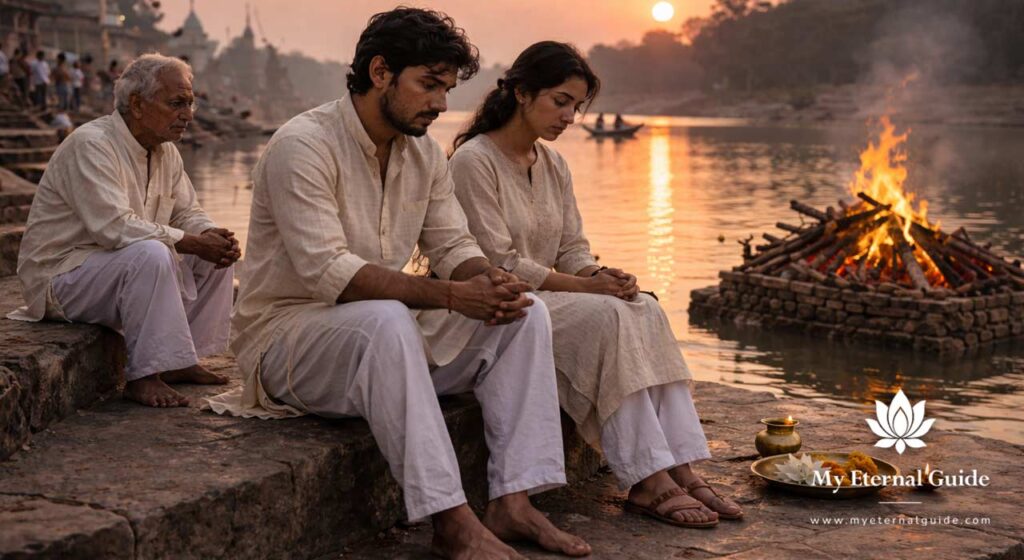
What death is or means are two of life’s deepest questions. Not only because death is so mysterious but because it touches so many aspects of our life, from loss and fear to love, meaning and the soul.
At some point, almost everyone wonders:
- What happens after death?
- Does the soul continue?
- Will I meet loved ones again?
- What determines where the soul goes?
The Vedas, along with texts like the Bhagavad Gita, the Upanishads and the Bhagavata tradition, offer a rich and nuanced understanding of death and what lies beyond it.
In Vedic thought, death is understood as a transition in the journey of the soul rather than an absolute end.
This page brings together timeless Vedic wisdom to help you understand:
- What death means in the Vedic tradition
- What happens to the soul
- How karma and consciousness shape the journey ahead
- How reflecting on death can help you live more deeply now
Start here
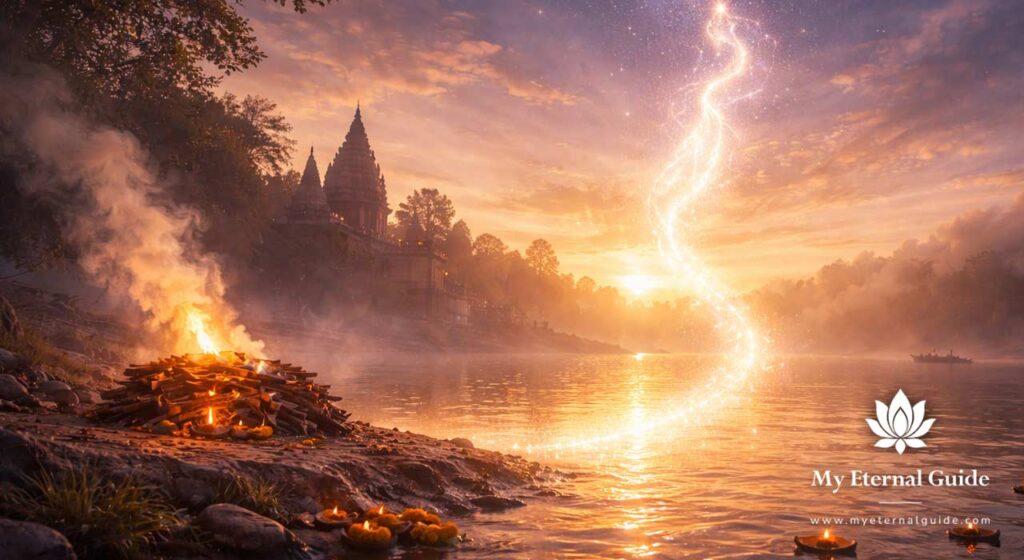

How do karma and consciousness affect what comes next?
What is rebirth?
What happens after death according to the Vedas?
The Vedic view begins with a simple but insightful distinction – the body dies but the soul lives on. Put another way, the body is temporary but the soul is permanent.
The Bhagavad Gita teaches us that the self is not destroyed when the body falls away. Death is simply a change of condition…not the end of existence. This perspective changes the way we view death.
Instead of asking only, “How did life end,” the Vedic tradition also asks, “Where does consciousness go from here?”
Death is seen as a passage, a continuation and a movement in a much longer journey that the soul goes through.
👉 To explore this more fully:
→ What Happens After Death in Hinduism Vedic Scriptures
#after-death
What is the soul?
In Vedic thought, the soul is the conscious self. The soul is the one who experiences, remembers, desires and moves through lifetimes. It is different from the body, the mind as well as from temporary roles and identities that we take on in various lifetimes.
This viewpoint is the reason that the Vedic teachings place so much emphasis on self-knowledge. When we believe that we are just the body, death appears to be the end. When we understand that we are the soul, death becomes a mere transition.
We realize that the soul is enduring, conscious, subtle and on a journey.
👉 If you want a deeper and more devotional lens on the soul’s journey:
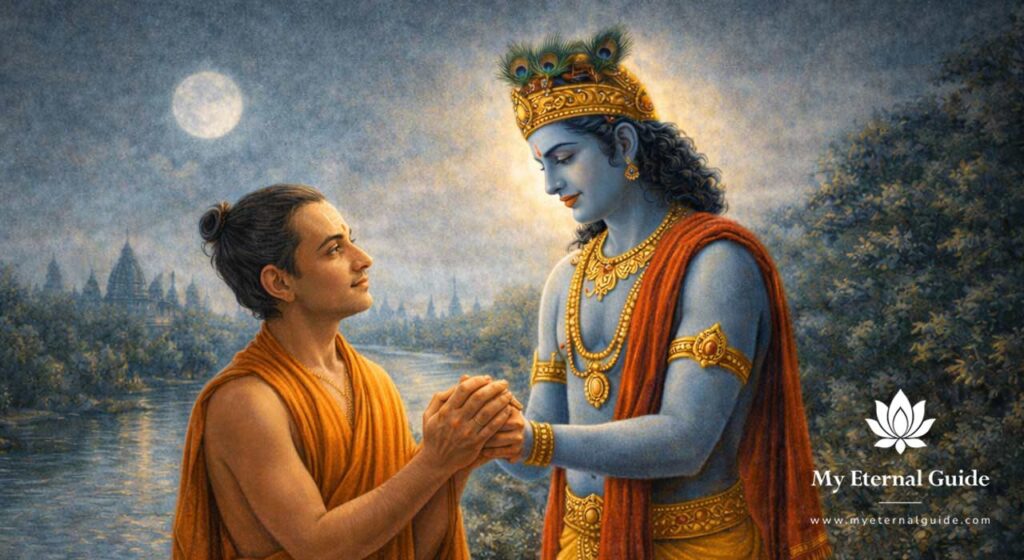
→ What Happens When the Soul Meets Krishna | Brihad Bhagavatamrita
#soul
How do karma and consciousness affect what comes next?
In Vedic wisdom, what happens after death is perfectly planned. The direction in which the soul proceeds is shaped by four factors:
- Karma
- Inner tendencies
- State of consciousness
- Spiritual development
Every action leaves an impression. Every habit shapes the mind. Every form of remembrance creates deeper patterns in a certain direction.
The Vedic tradition places great importance on the condition of the mind at the time of death because the last thought reflects what a person has been cultivating or thinking about throughout life.
#karma-consciousness
What is rebirth?
Rebirth means that the soul takes on another body after death according to the soul’s karma and its consciousness.
This idea helps explain:
- Differences in life circumstances
- Continuity across lives
- The moral and spiritual arc of existence
The Vedic tradition sees life as part of a long unfolding. This understanding of life encourages us to be responsible, patient, spiritual and also hopeful – because no sincere effort is ever wasted.
#rebirth
Will I meet loved ones again?
This is one of the most human questions of all. The Vedic tradition teaches us that souls are connected through karma, affection, consciousness and destiny in subtle ways.
Relationships do not disappear into nothingness. Relationships are to be understood through the lens of several lifetimes. Love is not destroyed by death. Love belongs in a much larger spiritual reality.
For many people, this perspective brings comfort because it shows us that love does not end with death and is not confined to one visible form.
#loved-ones
Why reflecting on death can bring peace
When reflected on deeply, death can bring wisdom into life.
It reminds us of:
- What matters
- What does not last
- What deserves our attention now
In Vedic thought, reflecting on death can help us become aware of and reduce feelings of pettiness, egoistic thoughts and wasted time. Contemplating death can also increase how present we are, our sense of purpose, our feelings of devotion and our inner maturity
👉 For a broader philosophical reflection on reality and existence, explore:
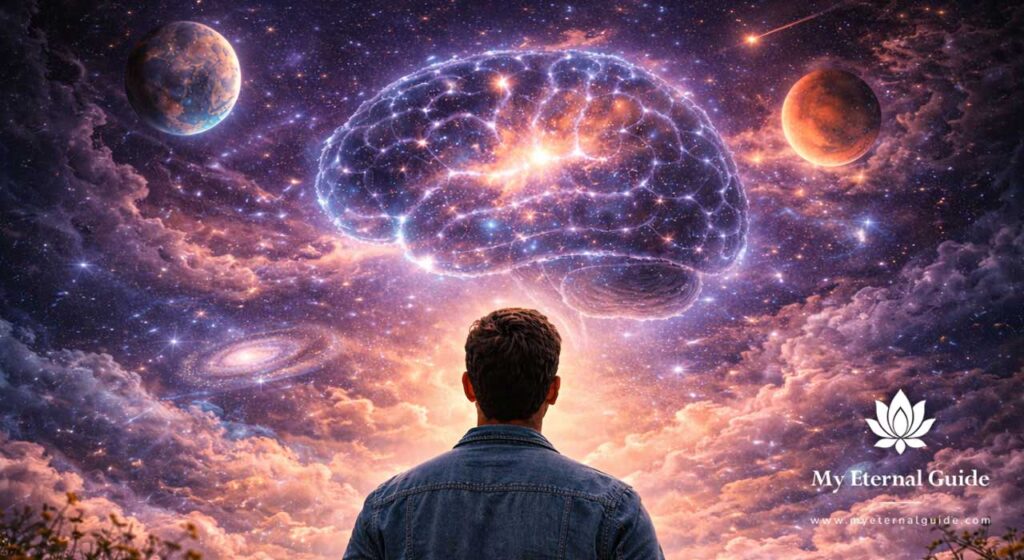
→ Why We Live in a Place That Doesn’t Physically Exist
#reflecting-on-death
A simple way to live in light of death
The Vedic tradition asks us to think about what kind of life prepares us for our soul’s onward journey. When we contemplate the reality that one day, we will all die, we begin to live a more present and conscious life.
Every moment gives us a chance to increase our awareness, to live more truthfully and to prepare our minds for peace.
Still thinking about death, the soul or what happens beyond this life?
These questions are deep and personal. You do not have to deal with them alone.
You will receive guidance rooted in timeless wisdom, applied to your personal situation.
Related Questions
You might also be wondering:
What determines rebirth?
Will I meet my loved ones again?
Why do the Vedas say death is a transition?
The Vedas and related scriptures teach that the body dies, but the soul continues its journey. Death is seen as a transition rather than an ending.
The soul continues according to its state of consciousness, karmic impressions and spiritual evolution. Different Vedic texts describe this journey in different ways.
Yes. Rebirth is a central concept in Hindu thought, where the soul takes on another body based on karma and consciousness.
Understanding death can reduce fear, deepen perspective and encourage a more conscious way of living in the present.