
Is Wanting Wealth Spiritually Wrong?
April 30, 2026 | By Madhura Samarth and Layla Nathwani
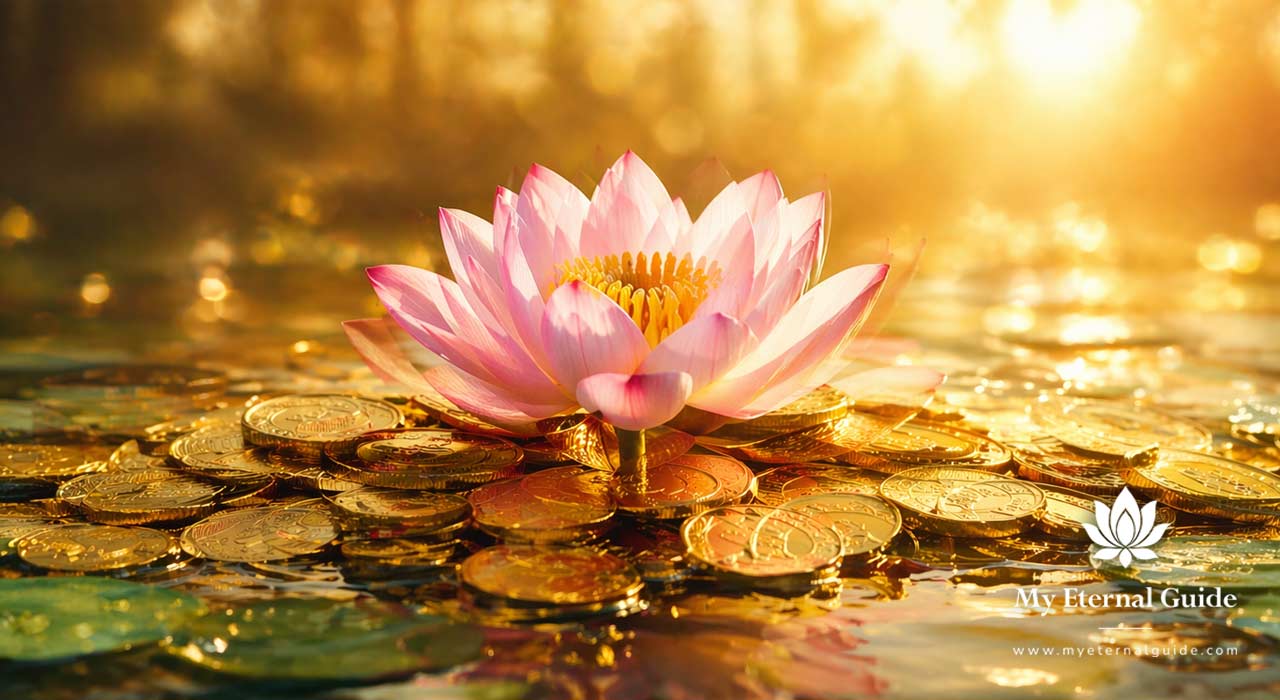
Wanting wealth is not spiritually wrong in the Vedic worldview. When we pursue wealth in a dharmic way, use it responsibly and remain inwardly detached, wealth becomes a tool for growth, service and balance in our lives. Acquiring and possessing wealth becomes harmful only when our thoughts and actions are guided by our attachment to material objects.
A Scriptural Insight
From the Arthaśāstra: Dhanamūlam idaṁ jagat
Meaning: Wealth is an essential foundation of worldly life
This verse reminds us that wealth is one of the four pillars on which society rests. The Vedic tradition recognizes artha (wealth) as one of the four puruṣārthas, the legitimate goals of human life, alongside dharma, kama (desires & fulfillment) and moksha (liberation).
Understanding Wealth Through the Vedic Lens
Many of us feel guilty about possessing wealth. We wonder if spiritual growth means rejecting material success. This confusion arises because we separate spirituality from daily life.
The Vedic system encourages us to integrate wealth to create a balanced life. There are four pillars of human pursuit in Vedic thought:
- Dharma: Right action and responsibility
- Artha: Wealth and resources
- Kama: Desires and fulfillment
- Moksha: Liberation
The pillar of wealth sits in the middle of this matrix and has the potential to support our spiritual pursuits. When our wealth is used in alignment with dharma, it can help fulfil our life. When we use our wealth against dharma, it can create restlessness.
A Story from the Vedic Tradition: King Janaka’s Wisdom
King Janaka, the ruler of Mithila, was both a wealthy king and an enlightened sage. This combination often confuses us. How could someone deeply spiritual live amidst immense luxury?
One day, a group of seekers visited Janaka’s court. They expected to find a renunciate. Instead, they saw a king surrounded by grandeur, fine garments, music and royal comforts. They doubted his wisdom and his status as an enlightened being. Janaka understood their apprehension and invited them to stay. During their visit, he instructed them to carry a bowl filled to the brim with oil and walk across the palace without spilling a drop. Guards walked beside them with swords, reminding them of the consequence of failure.
The seekers walked carefully, focusing only on the bowl. Afterward, Janaka asked, “What did you observe in the palace?” They replied, “Nothing. Our entire attention was on the oil.” Janaka smiled and said, “That is how I live. I am surrounded by wealth but my awareness remains anchored within.”
This story shows us that we can possess wealth and live in material comfort without being attached. Like Janaka we too can master our relationship with wealth. We don’t need to reject it altogether to pursue a spiritual path.
Why Wealth Itself Is Neutral
In Vedic thought, wealth is considered neutral energy. It becomes constructive or destructive depending on how we engage with it.
Think of wealth as fire.
- Fire can cook food and nourish life
- Fire can also burn and destroy
The difference lies in how we use it.
Similarly, wealth can:
- Support families
- Enable education
- Fund acts of charity
- Create opportunities
Or it can:
- Fuel ego
- Create greed
- Lead to exploitation
The problem occurs when we deal with wealth without being mindful and aware of how we acquire and use it.
The real question is: “Why do we want wealth and how do we use it?”
If our desire for wealth comes from feelings of insecurity, comparison or fear, wealth will never satisfy us. But If this desire arises from a sense of responsibility, growth and the desire to contribute, wealth becomes sacred.
Practical Steps to Align Wealth with Spiritual Growth
Let us bring this wisdom into our daily lives with clarity and simplicity.
1. Anchor Wealth in Dharma
Before earning or spending, we can pause and ask:
- Is this action aligned with our values?
- Does this action harm or uplift others?
When wealth follows dharma, it brings peace.
2. Practice Conscious Earning
The Vedic texts emphasize right livelihood.
We can choose work that:
- Creates value
- Maintains integrity
- Supports society
These types of work transform earning into a spiritual practice.
3. Use Wealth as a Tool for Contribution
A portion of our wealth can always flow outward.
This includes:
- Supporting family
- Helping those in need
- Contributing to meaningful causes
You can explore structured giving practices through trusted resources like
https://www.giveindia.org which offers transparent ways to support social causes in India. Giving purifies our relationship with wealth.
4. Cultivate Inner Detachment
Detachment means:
- We enjoy wealth without considering it to be part of our identity
- We remain equanimous whether wealth increases or decreases
These practices bring us inner freedom.
5. Balance Artha with the Other Goals of Life
Wealth alone cannot complete us.
We must also nurture:
- Dharma through right action
- Kama through healthy joy
- Moksha through self-awareness
Balance creates fulfillment.
6. Reflect Regularly
Set aside time to ask:
- Is my pursuit of wealth creating peace or pressure?
- Am I becoming more grounded or more restless?
Awareness keeps us aligned.
Modern psychology echoes this ancient wisdom.
Research from https://www.britannica.com/topic/money-and-happiness
explains that beyond a certain point, wealth does not significantly increase happiness. Meaning, relationships and purpose play a larger role. The Vedic texts recognized this thousands of years ago. Wealth supports life. It certainly does not define it.
Take a quiet moment and ask yourself: “Are you seeking wealth to feel complete or are you using wealth as a tool to express a complete life?” This single question can transform your entire relationship with money. Wealth is a part of life. Wisdom lies in how we relate to it.
If this question stirred something within you, there may be deeper answers waiting for you. At chat.myeternalguide.com, we explore timeless Vedic wisdom for modern challenges. You can ask your own question privately and receive guidance rooted in the Vedic tradition. Your next insight may begin with a simple question.
Resources for Deeper Understanding
If this topic resonates, you may also find clarity in these guides:
These will help us deepen our understanding step by step.
Frequently Asked Questions (FAQs)
2. Does spirituality require giving up money?
No. Spirituality teaches us awareness and detachment when dealing with money. It does not reject material resources.
3. What is the right way to earn wealth according to the Vedas?
Wealth should be earned through ethical means, aligned with dharma and without harming others.
4. Can wealth and enlightenment coexist?
Yes. Figures like King Janaka demonstrate that inner detachment allows spiritual growth alongside material success.
5. How can we avoid becoming attached to money?
By practicing awareness, giving regularly and grounding our identity beyond material possessions.
Yes. Hindu philosophy acknowledges wealth as a legitimate goal of life when pursued with dharma and balance.
No. Spirituality teaches us awareness and detachment when dealing with money. It does not reject material resources.
Wealth should be earned through ethical means, aligned with dharma and without harming others.
Yes. Figures like King Janaka demonstrate that inner detachment allows spiritual growth alongside material success.
By practicing awareness, giving regularly and grounding our identity beyond material possessions.
