
Money, Fear & Security in the Vedas

Money issues are rarely just about money. Emotions like fear, pressure, comparison and uncertainty play a big role in driving our unease.
The Vedas, including texts like the Bhagavad Gita and the Upanishads, offer a deep understanding of fear, attachment, effort, karma and inner steadiness.
If you’re here, you may be asking:
- Why am I so anxious about money?
- Is wanting wealth wrong?
- How do I stop fearing the future?
- Why do I feel insecure even when things are fine?
In Vedic thought, wealth itself is not the problem. The key issue is the relationship we have with gain, loss, security and control.
This page brings together timeless Vedic wisdom to help you understand:
- Why financial issues create fear
- How attachment and insecurity operate
- How to move forward with steadiness and clarity
Start here



Why does financial instability create fear?
Financial instability creates fear because our financial situation becomes tied to survival, safety and self-worth.
The mind begins to think:
- What if I lose what I have?
- What if I don’t have enough?
- What if something goes wrong later?
In Vedic philosophy, fear often arises from attachment and identification. When our peace of mind depends entirely on outer conditions, our minds become unstable.
This way of thinking does not mean that financial security should not matter but it does mean that our mental peace cannot be linked to it.
Fear takes over when:
- Our future feels uncertain
- We compare ourselves to others
- Our sense of worth depends on our achievements
- We believe security can only come from external control
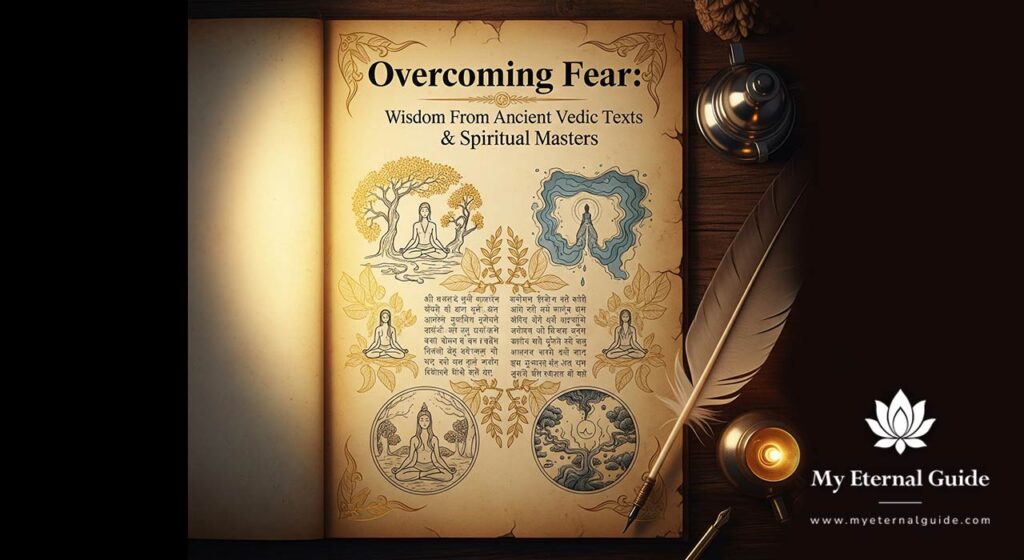
👉 To explore this fear more deeply:
→ Overcoming Fear: Wisdom From Ancient Vedic Texts & Spiritual Masters
#money-fear
Is desiring wealth wrong in Vedic thought?
Wealth has always had an honoured place in a person’s life according to Vedic thought. But wealth should be approached wisely and dharmically. Artha or material well-being, is one of the recognised aims of human life in Vedic philosophy. That means that we need to think about our relationship with money rather than think about whether it’s OK to desire it.
In Vedic thought, desiring or possessing wealth becomes healthy when it is connected to right effort, responsibility, balance, service and gratitude. The need to have wealth becomes unhealthy only when it is driven only by greed, fear, comparison or inner emptiness.
You can seek prosperity while also seeking wisdom. You can value success while staying inwardly steady.
👉 If you want to reflect on desire, prayer and intention:
→ How to Pray for What You Want: A Vedic Guide to Asking with Clarity
#wealth
How to deal with uncertainty about the future
A great deal of anxiety we feel in regards to money is linked to our anxiety about the future. The mind is always planning ahead:
- What if something goes wrong?
- What if I make the wrong decision?
- What if I am not prepared?
The Bhagavad Gita offers us a course correction: it asks us to focus on taking the right action rather than trying to control outcomes.
This perspective changes everything. We still plan, act responsibly and care but we stop expecting certainty as we continue to perform the action we are required to take.
Vedic wisdom teaches us that peace grows when we act with care in the present, instead of trying to mentally control every future possibility.
👉 If uncertainty is what’s weighing on you, read:
→ How can we overcome uncertainty?
#uncertainty
What do karma and effort have to do with financial life?
Many people have beliefs like:
- Maybe I’m blocked
- Maybe this is my karma
- Maybe hard times mean something is wrong with me
The theory of karma explains that we each bring with us past tendencies and past actions that lead to present conditions as well as consequences that are constantly unfolding. But the theory of karma also leaves room for effort, discernment, growth and conscious action.
What this means for us:
- Our current situation is not the whole story
- Hardship is not the end of possibility
- Steady effort still matters and can bring results
We are neither completely helpless nor completely in control. Our path needs to be one of engaged action coupled with humility.
👉 If this question resonates, explore:
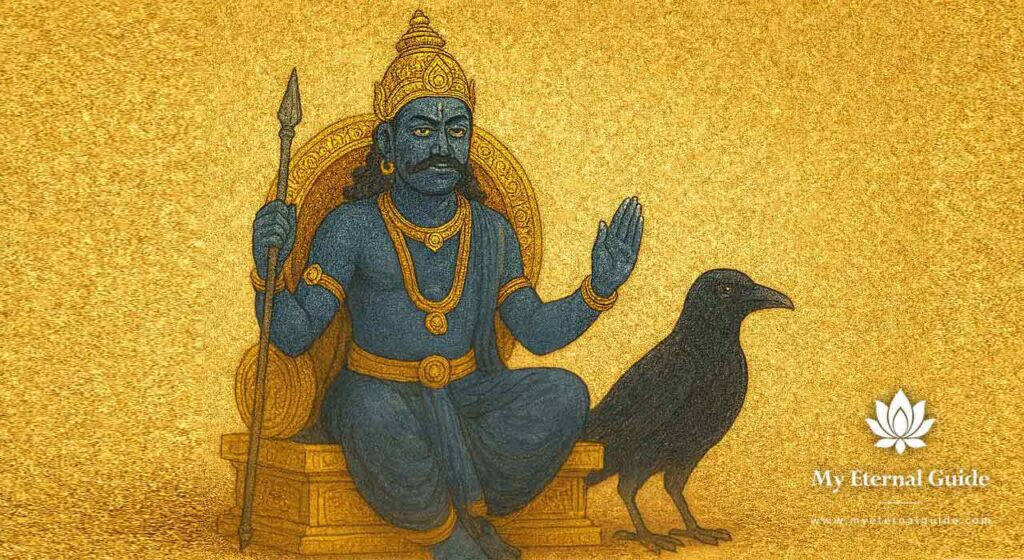
→ Is Shani Responsible For Our Hard Times
#karma-effort
Why insecurity stays with us even when life looks stable
Sometimes the outer situation is manageable, but the inner fear persists. This issue occurs because insecurity is not always created in the present moment. It can also come from old fears, past instability, habitual comparison and a deep attachment to the need for certainty. So even when things improve, the mind does not immediately relax. This is the reason that external gain alone does not guarantee our inner peace.
In Vedic thought, true security comes from developing clarity, self-mastery, steadiness, faith in making the right effort and freedom from constant mental agitation.
👉 Many times, financial fear is tied to a restless mind rather than just the financial situation itself.
→ Explore this here
#insecurity
A Vedic way to relate to money more wisely
A healthier relationship with money begins with a few inner changes.
Move from:
fear → responsibility
comparison → clarity
panic → right action
grasping → steadiness
Ask yourself:
- What is actually needed right now?
- What is within my control?
- What is the most dharmic next step?
You can then begin to act from a sense of steadiness rather than from fear.
👉 If you want to reflect on how daily wisdom can transform your life practically:
→ How Vedic Self Help Transforms Daily Life
#wise-relationship
A simple way to move forward
Instead of staying in these thoughts:
“What if I lose everything?”
“What if nothing works out?”
Figure out:
“What is the wisest next step I can take today?”.
Remember that every moment gives you a chance to act wisely, to reduce fear and to build inner security.
Still feeling uneasy about money, the future or your sense of security?
You don’t have to face that uncertainty alone.
You will receive guidance rooted in timeless wisdom, applied to your personal situation.
Related Questions
You might also be wondering:

Why do I feel anxious about money all the time?

Can hardship become a source of growth?
Money can create fear because it becomes tied to safety, control and uncertainty about the future. Vedic wisdom encourages a steadier relationship with both gain and loss.
No. Vedic wisdom does not reject wealth. It teaches right relationship with wealth, responsibility in its use and freedom from unhealthy attachment.
Fear about the future can be reduced by focusing on right action, inner steadiness and a healthy relationship with uncertainty rather than trying to control every outcome.
Hardship can become a source of growth when it deepens awareness, humility and alignment rather than helplessness or bitterness.