
What Is the Soul in the Vedas? A Simple Explanation
June 04, 2026 | By Madhura Samarth and Layla Nathwani
Short Answer
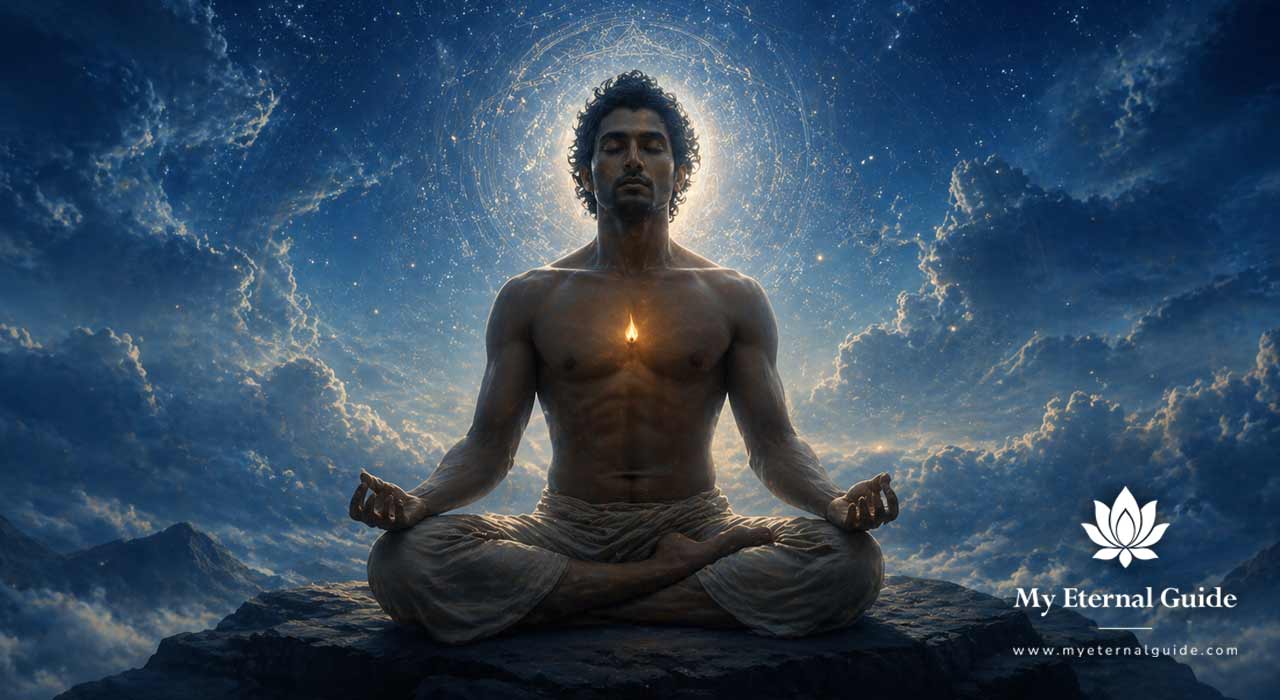
The soul, known as Atman in Vedic wisdom, is our eternal, unchanging essence. It is pure consciousness that exists beyond the body and mind. While our physical form changes, the soul remains constant, carrying experiences across lifetimes and guiding its own journey toward truth, peace and self-realization.
Scriptural Verse
The Bhagavad Gita 2.20 says:
“The soul is never born, nor does it ever die. It has always existed and will always exist. It is eternal, unchanging, and beyond destruction.”
The question “What is the soul?” has been asked across generations. Modern science explores consciousness but the Vedas addressed this truth thousands of years ago with great clarity. In Vedic philosophy, the soul is our deepest reality. It is the aspect of us that remains constant when everything else changes.
Our body evolves from childhood to adulthood. Our thoughts change. Our emotions rise and fall. There is a witness within us who observes all of this. That observer is the soul.
The Atman is described as:
- Eternal
- Indestructible
- Full of awareness
- Independent of the body
When we say “our life,” we often refer to roles and identities. But the Vedas remind us that our true identity is far beyond labels and that our essence is divine.
To explore this concept further, you may find this detailed explanation from the Stanford Encyclopedia of Philosophy helpful:
https://plato.stanford.edu/entries/personhood-india/
This alignment between ancient insight and modern inquiry shows that the idea of the soul is a thoroughly examined truth rather than a belief.
A Story from the Upanishads: The Teaching of Nachiketa
To truly understand the soul, let us step into a powerful story from the Katha Upanishad.
Nachiketa was a young boy, full of sincerity and curiosity. His father, performing a ritual, began giving away old and weak cows as charity. Nachiketa noticed this and questioned the integrity of the act.
With innocent persistence, he asked his father,
“Whom will you give me to?”
Frustrated, his father replied,
“I give you to Yama, the god of death.”
Taking this literally, Nachiketa went to meet Yama. When he arrived, Yama was away and Nachiketa waited patiently for three days without food or water. Impressed by his discipline, Yama granted him three wishes. After getting his the first two wishes fulfilled, Nachiketa asked his third and most profound question:
“What happens after death? Does the soul continue to exist?”
Yama initially tried to distract him with wealth, power and a long life. But Nachiketa remained firm. He wanted the truth and nothing else.
Finally, Yama revealed the truth about the soul:
- The soul is eternal
- It cannot be destroyed
- It is beyond pleasure and pain
- It is realized through self-knowledge
Yama explained that those who identify only with the body remain trapped in cycles of birth and death. But those who recognize the soul can attain liberation. This story is important because it reflects our own inner journey. We are often distracted by temporary rewards but like Nachiketa, if we seek the truth about ourselves with sincerity, then a deeper understanding begins to take place.
For more knowledge from the Upanishads, you can refer to this reliable source:
https://www.sacred-texts.com/hin/upan/index.htm
Why Understanding the Soul Matters in Our Daily Life
Understanding the soul transforms how we live.
When we see ourselves as only the body:
- We fear aging
- We fear loss
- We feel incomplete
But when we understand we are the soul:
- Fear begins to fade
- We become less reactive
- We act with clarity and purpose
This shift helps us respond rather than react and see life as a journey rather than as a race. The Vedas guide us to live with this awareness, even while fulfilling our worldly responsibilities.
Practical Steps to Experience the Soul
Understanding the soul intellectually is the first step. Experiencing it is how real transformation can happen. Here are simple practices you can begin today:
1. Daily Self-Reflection
Spend 5–10 minutes observing your thoughts. Ask, “Who is noticing these thoughts?” This practice builds awareness of the observer within.
2. Practice Silence
Even a few minutes of silence daily helps us move beyond constant mental chatter. In silence, we begin to sense the presence of the soul.
3. Read Vedic Texts
Engaging with scriptures like the Shrimad Bhagavad or Bhagavad Gita deepens understanding. These texts are guides to self-realization.
You can explore more insights here:
What is dharma?
How to make the right, dharmic decisions?
Overcoming Fear – Vedic Wisdom
4. Live with Awareness
Notice your actions throughout the day. Are you acting impulsively or with awareness? Awareness connects you to your higher self.
5. Detach from Outcomes
Do your best but release your attachment to the results of your effort. This simple change in perspective aligns us with the nature of the soul, a soul, which is beyond external fluctuations.
A Deeper Perspective: Soul and Modern Life
Many of us chase validation, success and recognition but still feel a sense of emptiness. This emptiness comes because our external achievements cannot fulfill our internal longing.
The Vedas explain this clearly: The soul seeks connection with truth rather than material objects. When we forget this truth, we feel restless.
Understanding the nature of the soul helps us:
- Navigate stress with clarity
- Build stronger relationships
- Make decisions aligned with our values
This is why Vedic wisdom remains relevant today – it addresses the root cause of our emotional issues rather than just the symptoms.
The soul already exists within us and always has. Our journey is about remembering. Through awareness, reflection and guided understanding, we can begin to reconnect with our true self.
If this topic sparked a deeper question within you, follow that curiosity. At chat.myeternalguide.com, you can ask your question anytime. There is no cost, no pressure – just practical guidance rooted in timeless Vedic wisdom. Sometimes, one question can open the door to the kind of clarity that can transform our life.
Frequently Asked Questions (FAQs)
2. Is the soul different from the mind?
Yes, the soul is the observer, while the mind processes thoughts and emotions. The mind changes, but the soul remains constant.
3. Can we experience the soul directly?
Yes, through practices like meditation, self-reflection and studying Vedic texts, we can gradually experience the presence of the soul.
4. What happens to the soul after death?
According to Vedic teachings, the soul leaves the body and continues its journey, taking a new form based on past actions and karma.
5. Why is understanding the soul important?
Understanding the soul helps us live with clarity, reduce fear and make decisions aligned with our true nature.
In Hinduism, the soul or Atman is eternal, unchanging and independent of the physical body. It represents pure consciousness and continues its journey across lifetimes.
Yes, the soul is the observer, while the mind processes thoughts and emotions. The mind changes, but the soul remains constant.
Yes, through practices like meditation, self-reflection and studying Vedic texts, we can gradually experience the presence of the soul.
According to Vedic teachings, the soul leaves the body and continues its journey, taking a new form based on past actions and karma.
Understanding the soul helps us live with clarity, reduce fear and make decisions aligned with our true nature.
