On this page
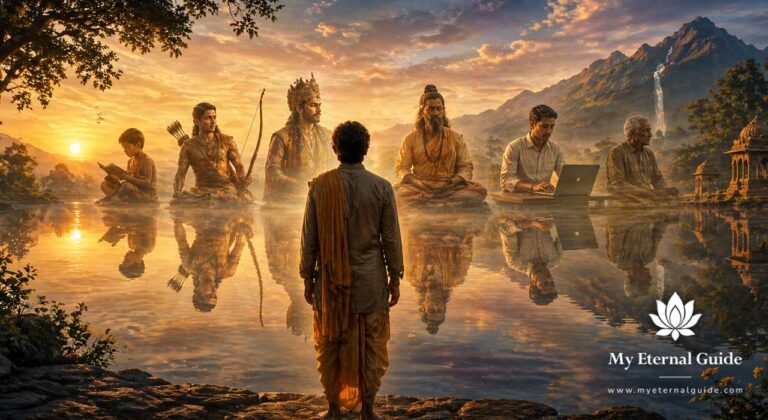
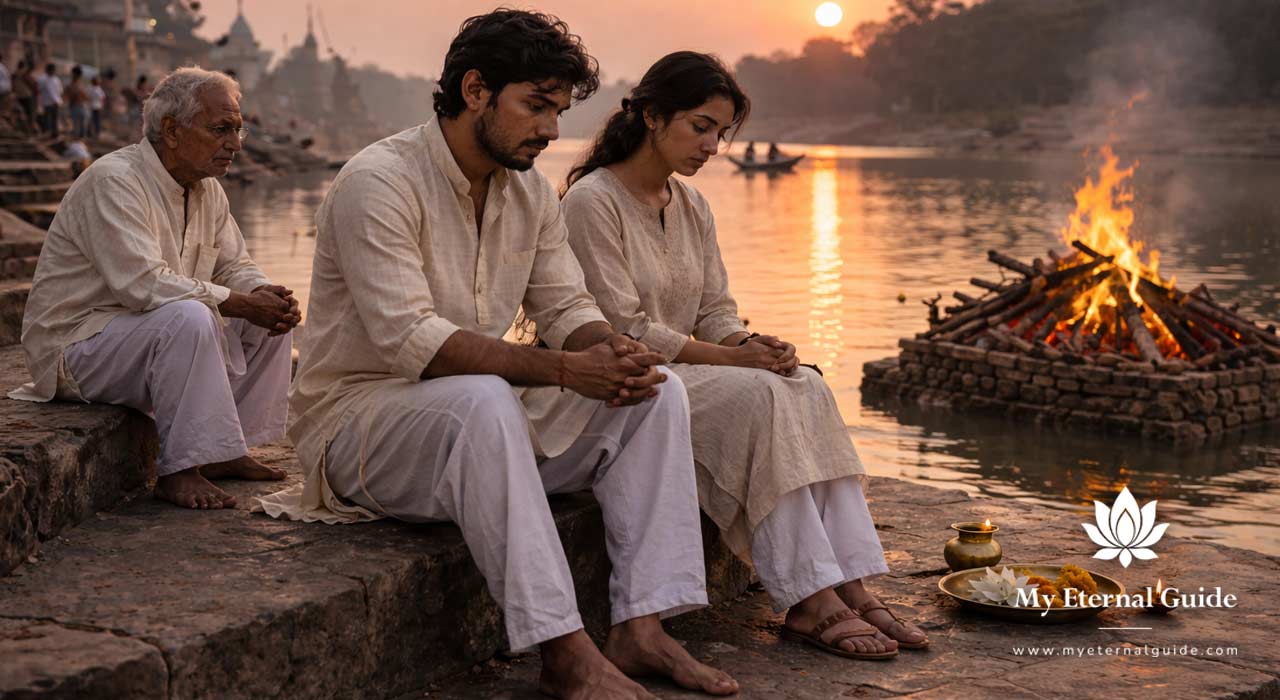
The Vedas, along with texts like the Bhagavad Gita, the Upanishads and the Bhagavata tradition, offer a rich and nuanced understanding of death and what lies beyond it. In Vedic thought, death is understood as a transition in the journey of the soul rather than an absolute end.
This page brings together timeless Vedic wisdom to help you understand:
- What death means in the Vedic tradition
- What happens to the soul
- How karma and consciousness shape the journey ahead
- How reflecting on death can help you live more deeply now
What happens after death according to the Vedas?
The Vedic view begins with a simple but insightful distinction: the body dies, but the soul lives on. In other words, the body is temporary while the soul is permanent.
The Bhagavad Gita teaches that the self is not destroyed when the body falls away. Death is understood as a change of condition rather than the end of existence.
This perspective changes the way we view death. Instead of asking only, “How did life end?”, the Vedic tradition also asks, “Where does consciousness go from here?” In Vedic wisdom, death is seen as:
- A passage
- A continuation
- A movement in a longer journey
- A transition rather than an ending
To explore this more fully:
 Read on the blogWhat Happens After Death in Hinduism Vedic Scriptures
What is the soul?
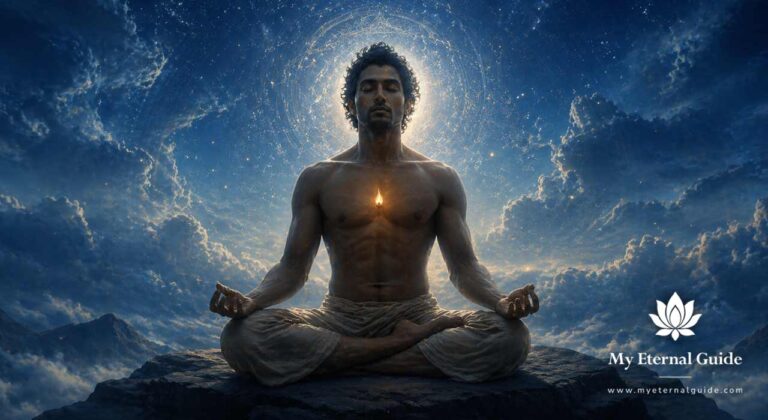
In Vedic thought, the soul is the conscious self. It is the one who experiences, remembers, desires and moves through lifetimes. The soul is distinct from the body, the mind and the temporary identities we adopt.
This understanding is why Vedic teachings place such importance on self-knowledge. When we believe we are only the body, death appears final. When we understand that we are the soul, death becomes a transition. The soul is described as:
- Enduring
- Conscious
- Subtle
- On a continuing journey
This perspective helps shift attention from temporary identities toward deeper spiritual understanding.
If you want a deeper and more devotional lens on the soul’s journey:
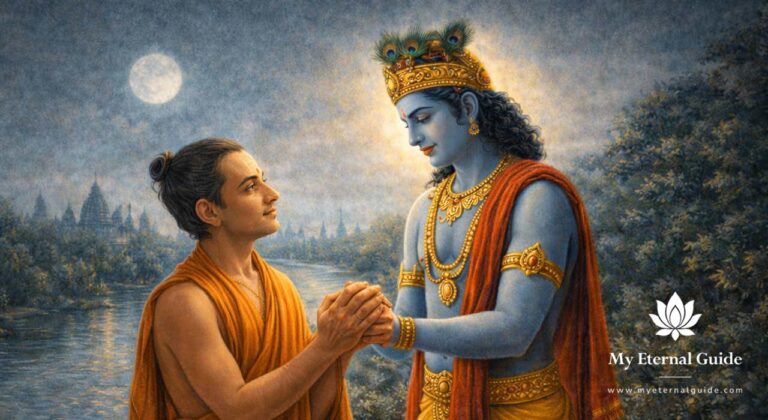 Read on the blogWhat Happens When the Soul Meets Krishna | Brihad Bhagavatamrita
How do karma and consciousness affect what comes next?
In Vedic wisdom, what happens after death is not random. The direction in which the soul proceeds is influenced by multiple factors that shape its ongoing journey. The soul’s path is influenced by:
- Karma
- Inner tendencies
- State of consciousness
- Spiritual development
Every action leaves an impression. Every habit shapes the mind. Every form of remembrance strengthens certain patterns over time.
For this reason, the Vedic tradition places great importance on the condition of the mind at the time of death. The final thought is seen as reflecting what a person has cultivated throughout life.
 Read on the blogHow Do Karma and Consciousness Affect What Comes Next?
What is rebirth?
Rebirth refers to the soul taking on another body after death according to its karma and consciousness. It is one of the central teachings of the Vedic tradition. This idea helps explain:
- Differences in life circumstances
- Continuity across lives
- The moral and spiritual arc of existence
The Vedic tradition views life as part of a much longer unfolding journey. This perspective encourages responsibility, patience, spiritual growth and hope. It also reminds us that sincere effort is never wasted, even when results are not immediately visible.
If this question resonates, explore:
 Read on the blogWhat Is Rebirth?
Will I meet loved ones again?
This is one of the most human questions of all. The Vedic tradition teaches that souls are connected through karma, affection, consciousness and destiny in subtle ways.
Relationships are not viewed as isolated events within a single lifetime. Instead, they are understood through a much broader spiritual framework that extends beyond one life. According to this perspective:
- Souls remain connected in meaningful ways
- Love is not destroyed by death
- Relationships extend beyond one lifetime
- Spiritual bonds continue to matter
For many people, this understanding brings comfort because it suggests that love is not confined to one visible form of existence.
 Read on the blogWill I Meet My Loved Ones Again? Vedic Wisdom on Life After Death
Why reflecting on death can bring peace
When reflected upon deeply, death can bring wisdom into life. Rather than creating fear, it can help clarify what truly matters. Reflecting on death reminds us:
- What matters
- What does not last
- What deserves our attention now
In Vedic thought, contemplation of death can reduce pettiness, egoistic thinking and wasted time. It can also deepen our sense of purpose, devotion, presence and inner maturity. By remembering the temporary nature of life, we often become more thoughtful about how we live it.
For a broader philosophical reflection on reality and existence, explore:
 Read on the blogWhy Reflecting on Death Can Bring Peace